
.png)
.png)
.png)
.png)
.png)
.png)
.png)
.png)
.png)
.png)
The Flame Bearer by Bernard Cornwell
by
Natasa Djordjevic
- 11:21 AM
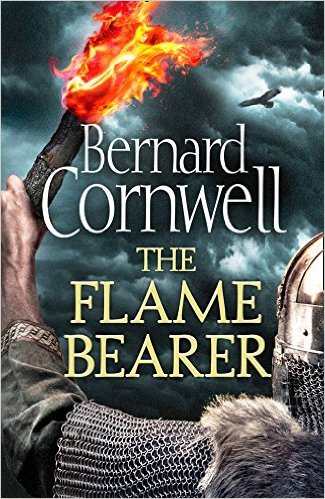
“So long as we remember names, so long those people live.”
Cornwell's writing quality, unpredictable plot, and well-developed characters didn't fail to impress me. I appreciate how he narrates the present action as a memory of an old man, dropping hints about what's to come. It's a clever technique that adds depth to the story. While this story doesn't have as much fighting action as the previous ones, it's packed with intrigue and plots, which I find equally enjoyable. Cornwell's depiction of Uhtred's inner thoughts on war, fear, necessity, and readiness is impressive, and the way his perspective changes with age, as well as his pragmatism on the subject, is well-conveyed. It's a beautifully written, human story that reminds me why Cornwell is one of my favorite authors.
I'm also impressed with the amount of conniving and deception that other characters and the reader are subjected to, which Cornwell skillfully pulls off. The plot is intricate, and complicated, yet completely believable, and it completely engrossed me in the story as I read. It's a fantastic historical action adventure that I would highly recommend.
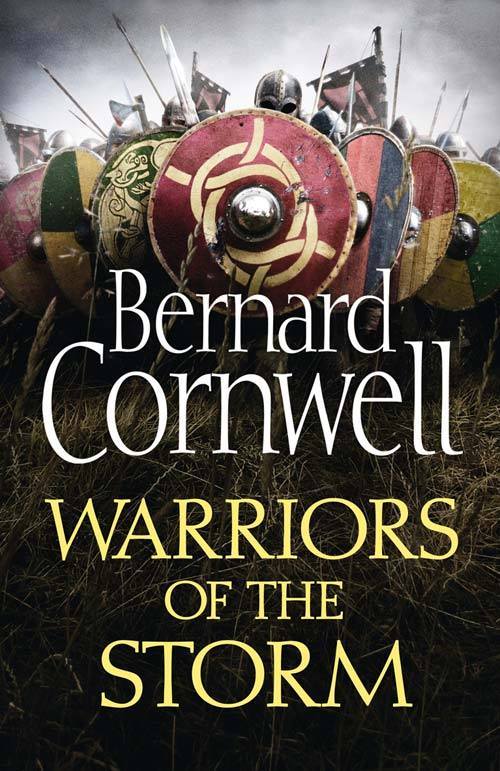
“Play with the devil," Finan said, "and you get burned.”
In this story, Uhtred defends Mercia for Aethelflaed, who is the daughter of Alfred and the queen of Mercia. However, Northumbria is in a vulnerable state and is constantly being attacked by various warlords. Although Aethelflaed's brother, Edward, is the ruler of Wessex, he is not in a position to help Mercia as he has his issues to deal with. England needs to be unified under Edward's rule, but that seems like a distant possibility as he is unable to march towards Mercia or retake Northumbria.
Ragnall is an invader who aims to conquer Northumbria. However, he lands in Mercia, and Uhtred, along with Aethelflaed, must figure out his true intentions. Uhtred must sift through feints and double feints to determine Ragnall's game, and one wrong move could mean death.
The story is about loyalties that are divided by conflicting national, religious, and family ties. Ragnall's brother Sigtryggr is now Uhtred's son-in-law, which raises questions about his involvement in the invasion. Uhtred's daughter, Stiorra, is also a concern. Finan, Uhtred's right-hand man, finds himself in a similar situation, as his brother Conall has joined Ragnall's force. The reason behind Finan's years of exile is also revealed.
Uhtred does not have enough men to handle Ragnall directly. He must use his cunning to hold him off, which includes making desperate journeys to convince enemies to join him and save his daughter. Brida, Uhtred's former lover, is another obstacle as she wants to reclaim England for the pagans and has become a crazed witch.
The conflict involves Norse and Christians on both sides, with pagans fighting for the Christian Aethelflaed and Irish Christians siding with the pagan Ragnall. The Saxons, Norse, and Irish fight for control of the British Isles, making for an interesting tale.

The choice of Joan Vaux as the protagonist to narrate the story is commendable. Being a commoner who rose to prominence in the Tudor court, gives us a unique perspective of the events from an outsider's point of view. This provides us with a more comprehensive view of life in the country at that time. Joan's character itself is captivating and remarkable for a woman of her time. I found it fascinating to read about her intimate relationships with the young Queen Elizabeth and her mother. The book provides insight into the challenges faced by women at that time, who had little personal power and were often treated as commodities to be traded for power and favor. It also highlights their resourcefulness in finding ways to influence events despite their limitations.
The Tudor dynasty was newly founded and tried to solidify its power in England. Henry Tudor married Elizabeth of York, daughter of Edward IV, to build alliances. However, Yorkist rebels continued to challenge the throne, and rumors persisted about the fate of the 'Princes in the Tower'.
Despite the tension, the detailed accounts of daily life in court and out of it during this time are fascinating. The author vividly describes household management, child-rearing, and court protocol, providing a great history lesson. The writing is modern, refreshing, and passionate about the period.
The book is not only a great story, but also a rich and immersive history lesson. The author's attention to detail, from the sights and sounds to the food and drinks of the time, is impressive and enhances the story.
Overall, the book is a must-read for lovers of historical fiction, especially those interested in the Tudor period. The stunning book design is a bonus.
Month of October: Best of Quotes
by
Natasa Djordjevic
- 9:37 AM


The Queen's Secret by Victoria Lamb
by
Natasa Djordjevic
- 5:17 AM

I thoroughly enjoyed reading this book. Elizabeth I has always been a fascinating historical figure to me, and this novel presents a gripping and realistic portrayal of her much-discussed relationship with the Earl of Leicester. The author beautifully portrays the characters, making us empathize with all the people caught up in this impossible love triangle by the end of the book.
Lucy Morgan, one of the characters, is a wonderful and likable protagonist who exhibits both grit and determination to rise in court and show considerable physical courage in the unfolding of the plot. I look forward to seeing how her story develops in 'His Dark Lady.'
The author's note at the end of the book is also very interesting, where Victoria Lamb describes her research process and clarifies which elements of the story are drawn from historical sources and which ones are purely fictional.
The Paris Secret Natasha Lester
by
Natasa Djordjevic
- 2:43 PM

I recently read a book that I found to be beautifully written, emotionally engaging, and entertaining. The characters in the book were captivating from start to finish, making it an exquisite read.
The book, titled "The Paris Secret", is set in Cornwall in 2012, where a fashion conservator named Kat discovers a cache of Dior dresses in a remote home closet. The house belonged to her grandmother, whom Kat wasn't even aware of until she received a call from London asking her to check on the empty house.
The story then takes us back to 1939 and introduces us to Skye, a woman with a passion for flying who wants to use her skills to help with the war effort. Skye is faced with the challenge of breaking down the barriers that prevented women from flying at the time. During her flying career, she meets two women, Margaux Jourdan and Catherine Dior, who worked for the French Resistance.
When a historian and author named Elliott Beaufort contacts Kat, asking if her grandmother's friend Margaux Jourdan was a spy who gathered information from the Nazis to pass on to the resistance, Kat is shocked. Her grandmother refuses to talk about her early years in France, causing Kat to wonder how much she knows about her grandmother's life.
"The Paris Secret" is a story that beautifully weaves together two timelines and two narrators, creating a web of characters and events that come together in a truly emotional ending. The book is a must-read for fans of historical fiction, mystery, and strong female characters. I loved the suspense, the romance, and the mystery of it all, and I appreciated the author's notes at the end of the book, which shed light on the real people and events from history that inspired the story.
Overall, "The Paris Secret" is a fascinating read that I highly recommend. It's a story of war, friendship, deep love, family, loss, and tragedy that will stay with me for quite some time.
Enchantress of Paris: A Novel of the Sun King’s Court by Marci Jefferson
by
Natasa Djordjevic
- 9:07 AM

The book was a perfect blend of romance, power struggles, and rich historical details. It transported me to the French court, where I could witness the beautiful dresses and dances.
Marie's character was well-developed, and her growth from a naive to a smart, strong, intelligent, and cunning woman was impressive. In the end, she made the best decision, which was a perfect conclusion to their love story.
The King's character was charming, likable, and idealistic. His response when reality struck was appropriate and understandable.
Their relationship was realistic and believable. Although based on a real-life affair, the author used creative license in constructing the characters and their actions. Every action they took had a clear purpose, and the story flowed seamlessly.
Month of Septembert: Best of Quotes
by
Natasa Djordjevic
- 11:23 AM


The Mirror & the Light by Hilary Mantel
by
Natasa Djordjevic
- 8:57 AM

“This is what life does for you in the end; it arranges a fight you can't win.”
This novel concludes Hilary Mantel's trilogy about the life of Thomas Cromwell. Mantel skillfully immerses readers in the story as Cromwell, a blacksmith's son of low birth, becomes Henry VIII's proxy to advance the king's interests, whether financial, marital, theological, or emotional. Unfortunately, Cromwell, the Lord Privy Seal, is also subject to his master's unpredictable nature. In this final book, Cromwell's opponents, Stephen Gardiner, Bishop of Winchester, and Thomas Howard, Duke of Norfolk, gain the upper hand and turn Henry against him.
The novel begins with Anne Boleyn's execution, and Cromwell uses his political schemes to improve not only his own family's fortune but also the king's. He continued to seize abbeys and Catholic properties and distribute the wealth among the nobility. Henry marries Jane Seymour, from a noble English family, which brings marital bliss but does little to secure England's increasingly tumultuous position against France and Spain. When Seymour dies after childbirth, Henry seeks another wife, this time to consolidate an alliance with Germany. He chooses Anne of Cleves, a decision that Cromwell is cautious about, and this disastrous union leads to his downfall.
This historical fiction novel humanizes Thomas Cromwell, a figure known for his meteoric rise from poverty to become King Henry's most trusted confidant and advisor, the Lord Privy Seal. Mantel writes sharp and witty dialogue that highlights her characters' strengths and weaknesses. According to her portrayal, Cromwell is haunted by his past in his dreams and waking moments, seeing the ghosts of friends, family, and even Bishop Wolsey, whom he once served. He is a cunning manipulator, an ambitious strategist, and a skilled interpreter of the king's desires and moods. However, his favor with Henry comes to an abrupt end.
I suggest reading the first two books in the trilogy before diving into this one. It requires some effort to remember the names of all the courtiers, politicians, clergy, and principal players in the Cromwell story, but Mantel provides a helpful guide. Nonetheless, this is an exceptional conclusion to the trilogy.
Lustrum by Robert Harris
by
Natasa Djordjevic
- 3:20 PM

“Surely the greatest mercy granted us by Providence is our ignorance of the future. Imagine if we knew the outcome of our hopes and plans, or could see the manner in which we are doomed to die - how ruined our lives would be! Instead we live on dumbly from day to day as happily as animals. But all things must come to dust eventually. No human being, no system, no age is impervious to this law; everything beneath the stars will perish; the hardest rock will be worn away. Nothing endures but words.”
This is the second installment in a trilogy by Robert Harris featuring ancient Rome. I greatly enjoyed the first book, 'Imperium', and gave it five stars. I am even more impressed with this one. The series follows the life of Marcus Cicero, renowned as the world's greatest orator and the first professional politician. The first book detailed his ascent to consul, the leader of the Senate, from his humble beginnings as a lawyer. This book picks up where the first left off, as Cicero begins his one-year term as consul. It chronicles his daily life as a Roman leader, as well as his efforts to save the Republic from its enemies within. The book is written as if it was a personal account by Tiro, Cicero's long-time secretary and slave. While Tiro did write a history of Cicero's life, the original record has been lost. The author claims that the books are based on existing historical records, although they have been adapted to create an engaging novel. The writing is insightful, witty, intelligent, and distinctive. Reading Tiro's perspective and dry humor is entertaining in itself, regardless of the plot. The story takes place around 60 B.C., during the transition from a government elected by the people to a dictatorship ruled by a single person. The cast of characters includes well-known historical figures such as Pompey, Sulla, Sura, Catalina, Hortensius, a young Mark Antony, and Julius Caesar. While the books focus on Cicero, Caesar is portrayed as the antagonist, the personification of evil behind the scenes. It was Caesar's insatiable ambition that led to the destruction of the Roman constitution, and this book follows his rise from junior politician to dictator over the whole empire. The author skillfully weaves together politics, subterfuge, intrigue, debauchery, manipulation, military prowess, ambition, ego, patriotism, and other aspects of the human condition to create a story with ever-increasing tension that will keep you hooked. Additionally, the book provides a fascinating history lesson, as the events portrayed did occur.
“As the wise Cicero said, “If you have a garden and a library, you have everything you need.”
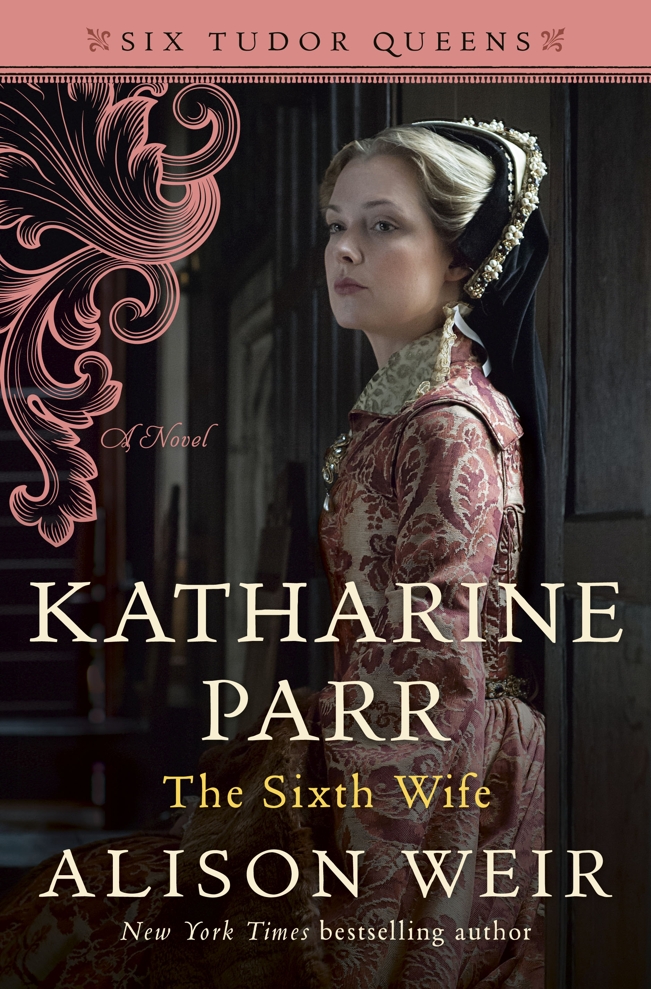
Katharine Parr: The Sixth Wife is the last installment in her Six Queens series. One pleasure of this series has been seeing the Queen’s life before their marriage. With Katharine, this is particularly fascinating as she was widowed twice before becoming Queen and remarried after Henry’s death. There is a large cast, and Katharine’s interactions with her family, friends, and stepdaughters are all a highlight. The parts detailing Katharine’s first two marriages were fascinating. Her first marriage’s unhappiness is a good contrast to her second, where we witness her growing interest in religion reformation and independence. Her experience during the Pilgrimage of Grace is well-used and must have been harrowing. Katharine became queen at a volatile time. Her mercurial husband, whom she does come to love, is surrounded by vying factions that almost unseat her. Desperate for a child, she takes active steps to build a family, and we see a lot of Mary and Elizabeth. Weir helps explain the complex myriad of religious beliefs and the Henrician Court and Europe. The scenes are detailed and believable and do “bring history to life.” Katharine emerges as a robust and well-developed character, and at the end of the series, it is thus quite sad but satisfying.
Month of August: Best of Quotes
by
Natasa Djordjevic
- 1:20 PM


